The Classical Languages major consists of in-depth study of the languages of classical and biblical worlds in their cultural and historical contexts. You will achieve at least intermediate competency in ancient Greek and in a second language (Latin or Biblical Hebrew), as well as have the option for further elective study in these languages at an advanced level.
Advanced reading courses in Greek, Latin, Hebrew, and other languages of antiquity will provide you with the unique opportunity to pursue these languages beyond the intermediate level, laying an exceptional foundation for future study and research. Periodically, we also offer courses in additional languages (e.g., Akkadian, Aramaic, Ugaritic) to supplement your core learning.
Why Study Classical Languages?
When you study Greek, Hebrew, and Latin, you will develop an awareness and appreciation of the languages and cultures of the ancient world through encounters with original texts. And you'll discover in these texts our shared cultural heritage and recurring questions of human existence.
Whether you pursue graduate education, teaching, research, or ministry, a strong foundation in classical languages can launch you into a variety of exciting educational and vocational directions. Knowing Greek, Hebrew, and Latin will prepare you for careers in history, medicine, law, archaeology, theology, ministry, linguistics, international relations, and so many more.
Last updated February 28, 2023
 Did you know? Classical languages majors routinely have among the highest scores on GREs and LSATs of students in any majors.
Why Study Greek, Hebrew, and Latin at Wheaton College?
2:1
Ratio of Students to Faculty
10
Options for Combining Classical Languages with a Companion Field
3
Languages
As a Classical Languages major at Wheaton College, you will study with faculty whose expertise covers the broad range of texts, histories, and legacies of the ancient world. Classical Languages faculty are dedicated to fostering inclusive classrooms in which students can thrive regardless of previous language learning experiences. And as dedicated followers of Christ, our faculty show how knowing the language and culture of ancient Greece, Israel, and Rome can enhance your understanding of Scripture and deepen your faith.
Our introductory language courses are designed to get as many students as possible as far as possible, and to have fun on the way. With the achievement of intermediate competency, the student can look forward annually to advanced original language reading coursework in Hebrew (texts drawn from biblical and extra-biblical sources, including pre-exilic Hebrew inscriptions, Ben Sira, the Dead Sea Scrolls, and the Mishnah), Greek (classical texts such as Homer and Koiné readings drawn from Judaism, Christianity, and the larger Greco-Roman world), and Latin (texts from both Roman and early Christian authors).
Classical Languages Honors Program
The Classical Languages program at Wheaton College offers a departmental honors program as an option for the Classical Languages major. To graduate with honors, the student must complete 4 hours of upper-division work in the language of concentration.
Faculty Publications
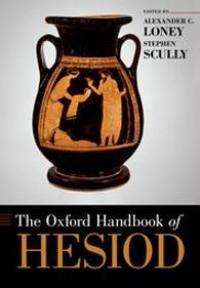 Classical Languages professors are actively contributing to their fields. Find out about some of the recent titles that have been published.
Language and Land Through the Lens of Ruth
 For Samantha Ferreira ’25, one of our Modern and Classiscal Languages students, language study is all about discovering anew the nuanced beauty of God’s Word and building closer relationships with those around her.
Where to Find Us
- Andrew Burlingame, Ph.D. - MCA 274 | 630-752-7336
- Jon Laansma, Ph.D. - MCA 202 | 630-752-5769
- Alexander Loney, Ph.D. – Section Coordinator - MCA 208 | 630-752-5631
- For general inquiries on the Classical Languages program, please reach out to Dr. Alexander Loney, the section coordinator.
What Will I Learn?
As you learn the ancient languages, you'll also hone your English writing skills as well. In addition to encouraging you to master the languages, you will learn to grasp concepts and shape your own, ask significant questions and seek answers, develop original ideas, become intellectually self-motivated, and give great attention to accuracy in the use and interpretation of your languages. You'll expand your vocabulary, your understanding of grammar, and your recognition of idioms.
As a student of Hebrew, Greek, and Latin at Wheaton College, you will develop an awareness and appreciation of the languages and cultures of the ancient world through encounters with original texts. You will discover in these texts our shared cultural heritage and recurring questions of human existence. Celebrate and enjoy the diversity of views and variety of expression in the language of others as your study of antiquity informs our shared human condition today. And gain a firm foundation for any number of educational and vocational paths after Wheaton.
Opportunities for Classical Languages Majors
A departmental honors program is an option for the Classical Languages major. To graduate with honors, the student must complete 4 hours of upper-division work in the language of concentration beyond the 4 required of regular majors and another 4 hrs in any upper-division HEBR, GREK, or LATN class or any other departmentally approved ancient language course (e.g., Akkadian, Aramaic, Ugaritic).
Upon selection, these courses are to be designated as “honors work.” “Honors work” means that a student’s work goes beyond that of the class’s other students, in quality if not quantity. These hours count toward the major and are usually taken in the senior year. The student will also take CLAL 499 Classical Languages Honors Thesis. Minimum acceptable grade in honors work is A-.The departmental honors designation will appear on a student's transcript and on the printed program at graduation. A copy of the thesis will be kept in the college library.
The Certificate in Latin for Classical Christian Education will provide you with a specialized interdisciplinary educational preparation for teaching Latin in a classical Christian environment. The program proceeds from the belief that the best preparation to be a teacher of Latin in a Christian school is the intensive reading and analyzing of the monumental works of Latin literature with an eye to how they communicate the great ideas of the past to us today. Wheaton’s Latin certificate program is unique in its integration of Christian faith and classical learning, asking whether and how Christ and the Christian virtues might be found in the (pre-Christian) classical world. Upon completing this program, you will have broad preparation to teach Latin and the classical tradition in primary and secondary schools.
As a Classical Languages student, you will have opportunities to participate in teaching and research assistantships in partnership with department faculty. Contact the department chair to learn more about available openings.
As a Classical Languages student, you may have opportunities to develop your teaching and presentation skills by tutoring fellow students and substitute lecturing when appropriate. Contact the department chair to learn more.
Each year, one undergraduate student enrolled in first-year Hebrew (HEBR 101-102) will receive the C. Hassell Bullock Award for Excellence in Hebrew. This award acknowledges outstanding achievement in the study of Classical Hebrew and is given in honor of C. Hassell Bullock, Professor of Hebrew Bible, Emeritus, who taught Hebrew language and biblical studies courses at Wheaton College from 1973 to 2009.
In spring of their junior year Classical Language majors and minors with an outstanding academic record are invited to apply for the Gerald F. and Jane E. Hawthorne Endowed Scholarship in Greek Studies. The award is given in the spring of senior year to a student (or students) going on to graduate studies in Greek, either Old or New Testament or classics. This scholarship recognizes the lifelong contributions of both Hawthornes who served the Wheaton College community from 1958 to 1995.
Handshake
Look for job opportunities for Classical Languages majors on the Center for Vocation and Career's Handshake Platform >
Classical Language Societies

Preparation For A Variety of Careers and Vocations
Whether our classical languages alumni go on to graduate school, missionary work, or various other careers, their studies have provided them a strong framework with which they can build on for future endeavors.
Exegetically Speaking Podcast
Hosted by Dr. David Capes, Exegetically Speaking features language experts who discuss the importance of learning the biblical languages—Hebrew, Aramaic, and Greek—and show how reading the Bible in the original languages “pays off.” Click on the ⓘ icon within each episode for a description of that episode. If you experience difficulties playing the episodes please try another browser or here.