Transcending Justice, Transcending Human Control: Overarching Providence in Shakespeare's Comedies and Romances.
Thursday, March 21, 2024 | 7:00 PM | Bakke Auditorium, Wade Center
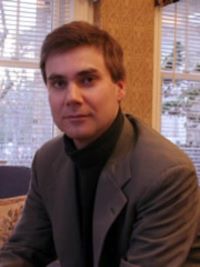 This presentation discusses how in Much Ado About Nothing, Measure for Measure, The Winter’s Tale, and The Tempest, providential events that work over and above those plays’ (mostly) benevolent manipulators serve to help bring about these plays’ comic endings in ways that transcend human control. These providential events also offer grace and mercy toward the plays’ various transgressors who, demonstrating repentance, are freed from the justice their transgressions merit and granted hopeful futures. By contrast, in the tragedies Romeo and Juliet, Othello, and King Lear, acts of misfortune help aid the malevolent machinations of characters that manipulate others for their own wicked ends.
Nonetheless, these incidents of bad fortune are not sufficient to bring about tragedy, but rather act in conjunction with the stubborn and violent decisions of the tragedy’s protagonists, whose poor choices coincide with unfortunate developments to bring about tragedy for the protagonists and those whom they love. This presentation suggests that the workings of Providence in these comedies and romances are in keeping with the Christian grounding evident throughout Shakespeare’s dramas, concluding that tragedy is normative in a fallen world, whereas the happy endings depicted in these comedies and romances require providential intervention.
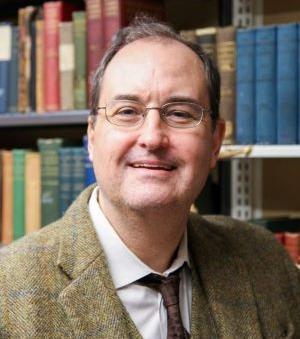 The bestselling Victorian novelist, Charlotte Mary Yonge, edited, introduced, and annotated an edition of Shakespeare’s Henry IV, Part I for Church of England schools. Building upon Molly G. Yarn’s pioneering Shakespeare’s ‘Lady Editors’ (2022), this lecture will offer the first sustained exploration of Yonge’s editorial choices. The complacent dismissiveness of bowdlerized editions will be questioned and challenged. Yonge’s introduction and notes were focused on pointing out where Shakespeare’s play departed from historical accuracy. The scene summaries are lucid, and some wonderfully arcane knowledge is included in the notes. Charlotte Yonge’s own precocious and productive life becomes the backdrop and context for celebrating children and adults who love Shakespeare, Falstaff, and Henry IV, Part I.
 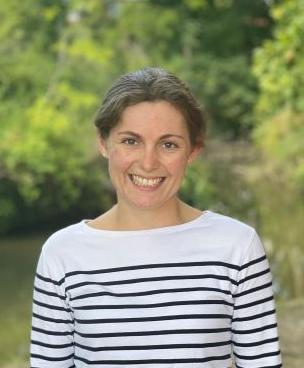 Although better known as an apologist, children’s writer, or medievalist, C.S. Lewis also engaged deeply with the works of William Shakespeare. In this talk, Dr. Waters will examine the different and varied ways Lewis explored Shakespeare (and his critics), and his reliance on Shakespeare as a frame of reference pointing not only to the immediate stories, characters, and themes, or even to his own extensive Renaissance learning, but using Shakespeare also to point towards The Story.
 Dr. Dunn-Hensley, Associate Lecturer in English, will explore the spiritual dimensions of the play, arguing that Macbeth, rather than depicting a nihilistic vision of the world, which often appears in adaptations, productions, and scholarly analyses, instead presents a spiritual battle with a fully developed sense of God, good, and evil. The lecture features a live performance from Shakespeare's Macbeth by Jeff Cribbs and Jenn Miller-Cribbs, directed by Mark Lewis.
 For the inaugural E. Beatrice Batson Shakespeare Society Lecture,